
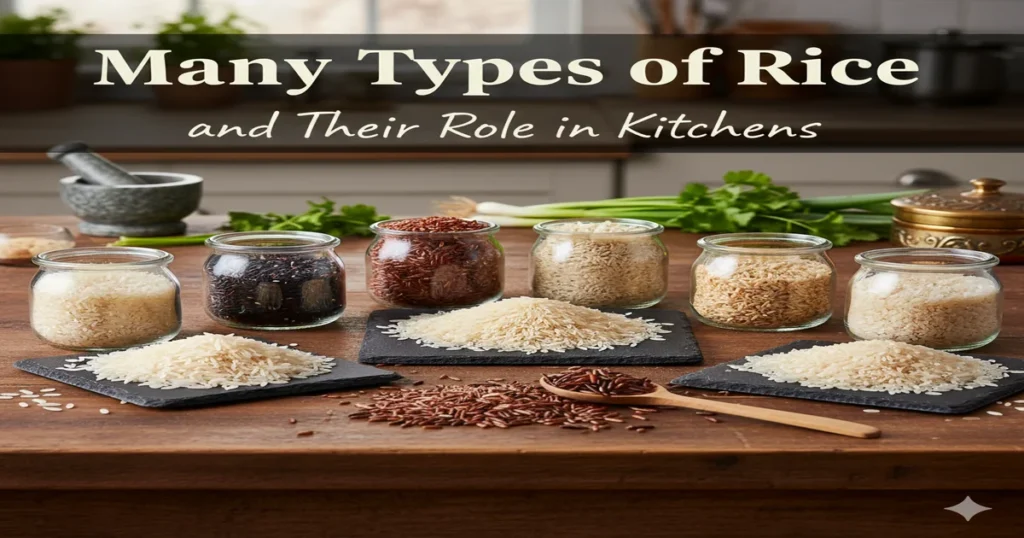
Rice is one of the most widely eaten foods in the world, enjoyed by millions of people every day. It comes in many different types of rice, each with its own unique flavour, texture, colour, and cooking method. From the long, aromatic grains of Basmati rice to the soft, slightly sticky Jasmine rice, every variety has something special to offer. Some rice is perfect for hearty curries, others work best in light salads, creamy risottos, or even sweet desserts.
Understanding the different rice types and their characteristics is key to making the most of your meals. Choosing the right rice can enhance the taste of your dish, complement the flavours, and make every bite more enjoyable. Whether you’re cooking a spicy Indian curry, a fragrant Asian stir-fry, a healthy rice bowl, or a decadent rice pudding, picking the right rice can make all the difference.
Types of Rice and What They Taste Like (Detailed & Natural Explanation)
1. Basmati Rice
Basmati is one of the most loved rice varieties in South Asia, especially in India and Pakistan. It has a naturally fragrant aroma that people often describe as floral or slightly nutty. When cooked, the grains stay long, separate and beautifully fluffy never sticky.
The taste is light and gentle, so it doesn’t overpower the dish. Instead, it enhances the flavours around it, especially spices and sauces.
Best for: biryani, pilau, Indian curries, grilled meats and any meal that needs elegant, aromatic rice.
2. Jasmine Rice
Jasmine rice is the heart of many Southeast Asian kitchens. It has a mild, sweet aroma, almost like fresh flowers or pandan leaves. The taste is soft, buttery and slightly sweet, making it very comforting.
Jasmine rice cooks quickly and becomes fluffy with a slight stickiness, which helps it hold together on the plate. This makes it great for dishes where you want rice to soak up rich sauces.
Best for: Thai curries, Chinese stir-fries, coconut-based dishes, and everyday Asian meals.
3. Brown Rice
Brown rice is a whole grain, which means it still has its bran layer. This gives it a stronger, nuttier taste compared to white rice. It feels more earthy and hearty, almost like whole wheat bread compared to white bread.
Because of its natural fibre, it stays firm and chewy even when fully cooked. Many people choose it for health reasons because it offers more nutrients and keeps you full for longer.
Best for: healthy meals, salads, grain bowls, and dishes where you want a more wholesome texture.
4. Pilau (Pilaf) Rice
Pilau rice is not just a type of rice it’s a method of cooking. The grains, usually basmati or another long-grain variety, are gently cooked with spices like cumin, cardamom, bay leaves or cloves.
This gives the rice a warm, inviting aroma and a mild spiced flavour. It’s flavourful but not overpowering, making it a favourite for celebrations, family meals or pairing with rich curries.
The grains stay separate and colourful, sometimes lightly coloured with turmeric, saffron or stock.
Best for: Indian meals, festive dinners, parties, grilled meats and side dishes that need an aromatic touch.
5. Arborio Rice (Risotto Rice)
Arborio rice is short, round and plump. It contains a lot of natural starch, which is the secret behind creamy risotto. When cooked slowly in broth, the grains release this starch, creating a silky, rich texture.
The flavour is mild, meaning that Arborio happily absorbs whatever flavours you add butter, cheese, herbs, wine or stock.
The outside becomes soft while the inside stays slightly firm, giving risotto its classic “bite.”
Best for: risotto, creamy dishes, rice pudding, soups and thick, comforting recipes.
6. Sushi Rice
Sushi rice is a short-grain variety that becomes sticky when cooked exactly what’s needed to form sushi rolls or rice balls. It has a very mild, neutral taste on its own.
Once seasoned with vinegar, sugar and salt, it develops a pleasant balance of sweet, tangy and savoury flavours.
Its stickiness allows it to hold its shape, making it essential for Japanese dishes that require precise presentation.
Best for: sushi, onigiri (rice balls), poke bowls and Japanese-style meals.
7. Black Rice (Forbidden Rice)
Black rice has a dramatic, deep purple-black colour when raw, turning dark purple once cooked. It has a rich, nutty flavour with a gentle sweetness.
The texture is soft on the outside with a slight chewiness inside, making every bite feel satisfying.
Black rice is known for being high in antioxidants and nutrients, which is why it’s often used in healthy or gourmet dishes.
Best for: salads, Buddha bowls, desserts, side dishes, and recipes that need a visually striking ingredient.
8. Red Rice
Red rice gets its vibrant colour from natural pigments in the bran layer. It has a strong nutty flavour and a bold earthy taste fuller and richer than brown rice.
The grains stay firm and slightly chewy even after cooking, giving meals more texture and depth.
It pairs well with both spicy and mild dishes because its natural flavour stands out beautifully.
Best for: healthy bowls, mixed rice dishes, curries, stir-fries and meals where you want extra nutrition and crunch.
9. Sticky Rice (Glutinous Rice
Sticky rice is extremely popular in Southeast Asia. Despite the name “glutinous,” it contains no gluten. The word simply refers to its sticky, glue-like texture.
When cooked, the grains clump together and form a soft, chewy mass that’s perfect for eating with your hands or shaping into balls.
It has a neutral taste on its own, which means it absorbs flavours very well sweet or savoury.
Best for: Thai mango sticky rice, dumplings, Lao sticky rice, desserts, and dishes where the rice needs to hold together.
10. Wild Rice
Wild rice is not technically rice it’s a grass seed. But it cooks and tastes similar enough to be grouped with rice varieties.
It has a bold, smoky flavour with earthy notes that stand out in any dish. The grains are long, dark and slightly firm, giving a lovely chewy texture.
Wild rice is popular in dishes that need depth and character, especially autumn and winter recipes.
Best for: salads, stuffing, mixed rice blends, grain bowls and hearty meals that benefit from rich, nutty flavours.
Dilchad’s Perfect Rice Options
Knowing these differences helps you choose the right rice for your dish, whether you’re cooking something spicy, creamy, sweet, or healthy. Picking the right rice not only improves the taste of your meal but also makes it more satisfying and visually appealing. No matter what cuisine or recipe you’re preparing, there’s a rice type that will bring out the best in your dish. Understanding the flavours, textures and uses of each variety gives you the confidence to experiment and enjoy rice in new ways.
The right rice can make your meal even more enjoyable, and our three rice options are perfect for pairing with so many dishes on our menu. On your next visit to Dilchad, try pairing different rice with your favourite meals. You might discover a new favourite combination!
