
When it comes to Indian biryani varieties, no two versions are quite the same. Hyderabadi, Kolkata, Lucknowi, Bombay, each carries its own spice blend, cooking technique, and regional story rooted in Mughal culinary history.
What are the main types of Indian biryani? The most popular varieties include Hyderabadi, Kolkata, Lucknowi (Awadhi), Bombay, Malabar, and Sindhi, each differing in spice level, rice type, and cooking method.
At Dilchad, a Bengali kitchen in Spitalfields since 1962, we’ve been serving authentic biryani for over six decades. Here’s your complete guide to the most-loved Indian biryani varieties.

Hyderabadi Biryani (India)
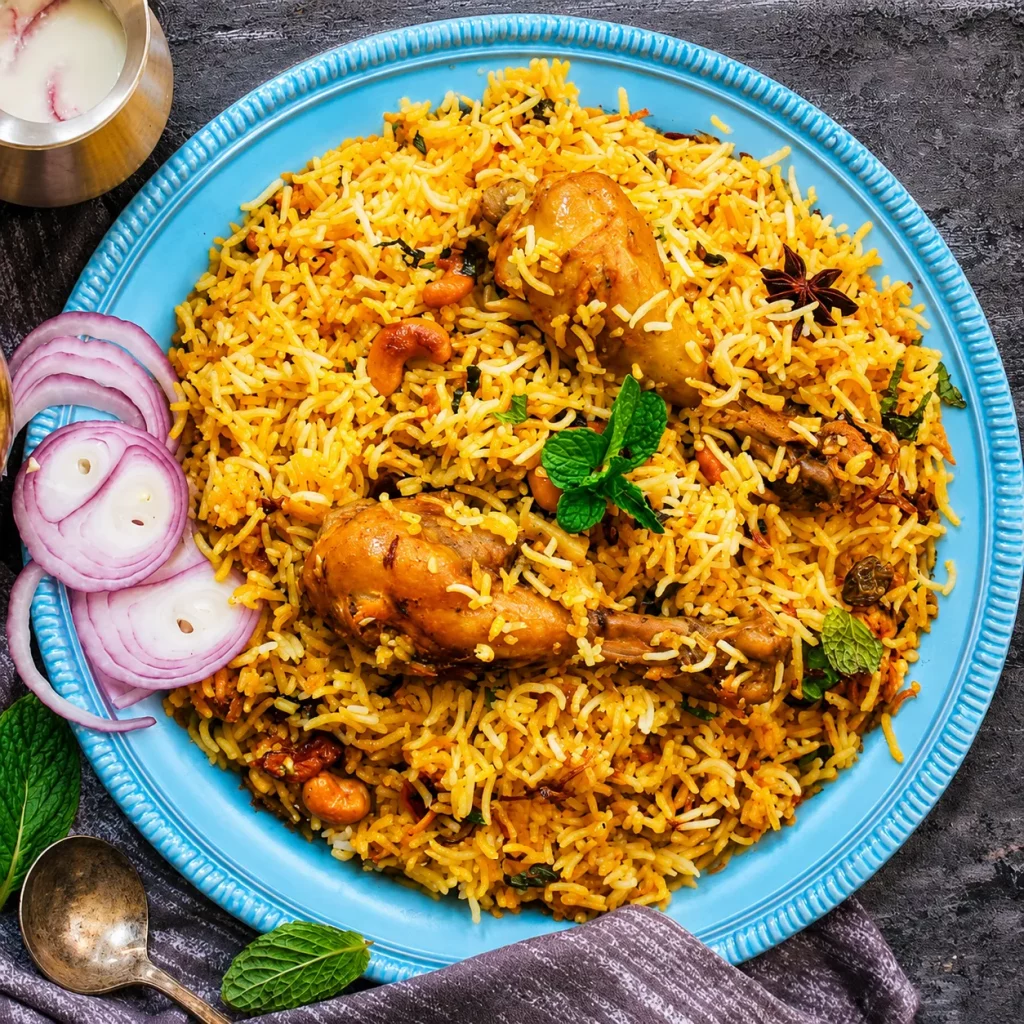
Hyderabadi Biryani is widely regarded as the king of all biryanis, rich, aromatic, and layered with centuries of culinary tradition. Born in the royal kitchens of the Nizams of Hyderabad, this iconic dish brings together the bold flavours of Mughlai and Deccani cooking in a single, spectacular pot.
What makes Hyderabadi Biryani unique? It is one of the few Indian biryani varieties prepared using two distinct methods, each producing a noticeably different result.
Kacchi Biryani: Raw marinated meat is layered directly with partially cooked basmati rice and slow-cooked together using the dum technique. This allows the juices from the meat to rise through the rice, creating deep, infused flavours in every grain.
Pakki Biryani: The meat and rice are cooked separately before being carefully layered and finished with a gentle steam. The result is a lighter, more delicately spiced biryani with beautifully defined layers.
Both versions use long-grain basmati rice, tender marinated mutton or chicken, saffron, crispy fried onions, fresh mint, and whole spices including cardamom, cinnamon, and cloves. The dum cooking technique seals all the aromas inside the pot, producing a biryani that is as fragrant as it is filling.
Hyderabadi Biryani is best enjoyed with a side of cooling raita or a spicy salan gravy. It is one of the most celebrated dishes in Mughal culinary history and remains one of the most popular Indian foods enjoyed across the UK and beyond. At Dilchad, we honour this tradition using authentic spice blends and slow cooking methods passed down through our Bengali kitchen in Spitalfields since 1962.
Lucknowi (Awadhi) Biryani (India)
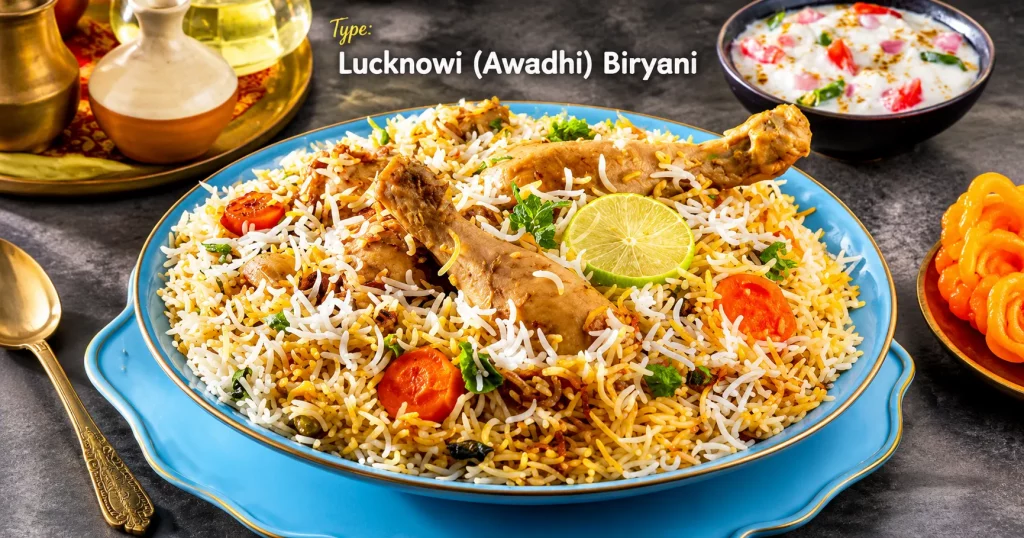
Lucknowi Biryani, also known as Awadhi Biryani, is the most elegant of all Indian biryani varieties. Born in the royal kitchens of Lucknow’s Nawabs, it is built on subtlety rather than heat.
What makes Lucknowi Biryani different? It uses the Pakki method, where meat and rice are cooked separately before being layered and finished with a slow dum steam. This keeps every component tender while allowing the delicate spices to infuse gently.
The flavour profile is unlike any other biryani. Alongside marinated meat and basmati rice, the recipe includes rose water, kewra essence, and saffron, giving it a floral, aromatic quality rooted in Mughal culinary history.
Lighter on the palate but rich in aroma, Lucknowi Biryani is best served with raita or a light curry. At Dilchad, we bring the same patience and care to every biryani we cook in our Spitalfields kitchen.
Kolkata Biryani (India)
Kolkata Biryani (India)
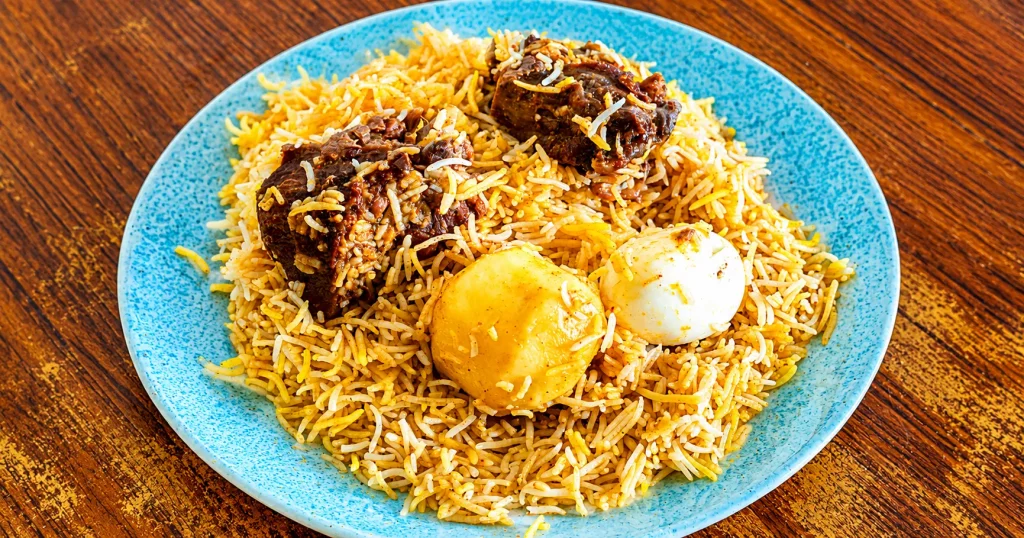
Kolkata Biryani is one of the most distinctive Indian biryani varieties, known for its delicate flavour and one very unexpected ingredient. The dish traces its roots to Nawab Wajid Ali Shah, who brought the Awadhi style of biryani to Kolkata in the 1800s. When meat became expensive during his exile, cooks began adding potatoes to maintain the richness of the dish.
What makes Kolkata Biryani unique? Unlike spicier regional varieties, it leans on fragrant, floral notes rather than heat. The recipe combines long-grain basmati rice, marinated mutton or chicken, saffron, and soft boiled eggs. But the real standout is the potato, slow-cooked until it absorbs every trace of spice and saffron, making it just as prized as the meat itself.
Mild, aromatic, and deeply comforting, Kolkata Biryani is a dish where history and flavour meet in every bite.
Bombay Biryani (India)
Bombay Biryani reflects the vibrant, multicultural spirit of Mumbai. Influenced by both North Indian and Iranian culinary traditions, it stands apart from other Indian biryani varieties with its distinctive sweet and tangy flavour profile.
What gives Bombay Biryani its unique taste? The secret lies in dried plums, which add a gentle natural sweetness to the rich masala. Combined with golden potatoes, marinated chicken or mutton, tangy yoghurt-based gravy, and fragrant basmati rice, each layer builds a flavour that is hearty, complex, and deeply satisfying.
Finished with crispy fried onions and fresh coriander, Bombay Biryani is slow-cooked using a traditional layering technique that allows every ingredient to infuse fully before serving.
Ambur Biryani (Tamil Nadu, India)
Ambur Biryani comes from the town of Ambur in Tamil Nadu and is one of the most beloved South Indian biryani varieties. Its reputation across the region comes from its beautifully balanced spice levels and a key ingredient that sets it apart from all other biryanis.
What makes Ambur Biryani different from other Indian biryani varieties? Rather than long-grain basmati, it uses Seeraga Samba rice, a short, aromatic grain that absorbs flavour far more deeply. Rooted in the culinary traditions of the Nawabs of Arcot, the meat is marinated in a curd-based masala with ginger, garlic, and dried chillies, giving it a bold yet never overwhelming depth of flavour.
Traditionally cooked over wood-fired stoves in large quantities, particularly for special occasions, Ambur Biryani carries a subtle smokiness that is difficult to replicate. It is always served alongside a tangy brinjal curry and cooling raita, making it one of the most wholesome and satisfying meals in all of Tamil Nadu cuisine.
Simple, soulful, and packed with character, Ambur Biryani is a true reflection of South Indian cooking at its finest.
Vegetarian Biryani
Vegetarian Biryani proves that you do not need meat to enjoy the rich, layered flavours of this iconic dish. Using the same dum cooking technique and fragrant spice blends as traditional biryanis, vegetarian versions are just as aromatic, indulgent, and satisfying.
What vegetables are used in Vegetarian Biryani? The most popular choices include paneer, mushrooms, mixed seasonal vegetables, and jackfruit. Each ingredient absorbs the basmati rice’s saffron and spice layers differently, creating its own unique flavour profile.
The most popular varieties include Veg Hyderabadi Biryani, layered with mixed vegetables, saffron, and mint; Paneer Biryani, rich and creamy with spiced paneer chunks; Mushroom Biryani, earthy and hearty with a deep umami quality; and Jackfruit Biryani, often called the vegetarian meat alternative for its satisfying, meaty texture.
Whether you are a lifelong vegetarian or simply looking for a lighter option, Vegetarian Biryani delivers on both flavour and comfort. Explore more vegetarian Indian dishes that we serve at Dilchad, where every dish is prepared with the same care and authenticity since 1962.
Explore All Indian Biryani Varieties at Dilchad
From the royal kitchens of Lucknow to the spice-laden streets of Mumbai, the many Indian biryani varieties each carry their own story, technique, and flavour. Whether you prefer the bold heat of Hyderabadi, the delicate fragrance of Lucknowi, or the comforting sweetness of Bombay style, there is a biryani for every palate.
Where can you try authentic Indian biryani varieties in London? At Dilchad, our kitchen in Spitalfields has been cooking traditional biryani since 1962, drawing on over six decades of Bengali culinary heritage passed down through the Choudhury family. Every biryani we serve is prepared using authentic spice blends, long-grain basmati rice, and the same patience and care that has defined our cooking for generations.
Whether you are dining in with family, celebrating a special occasion, or simply craving something truly satisfying, we would love to welcome you. View our full menu and reserve your table at Dilchad, Liverpool Street today.
Dilchad Biryani (Brick Lane, London)
If you are looking for authentic biryani in the heart of East London, Dilchad has been the go-to destination since 1962. Founded by the Choudhury family and rooted in Bengali culinary tradition, our kitchen in Spitalfields has spent over six decades perfecting the art of biryani cooking.
What makes Dilchad’s biryani worth trying? Every portion is made with long-grain basmati rice, freshly ground spices, and carefully marinated meat, slow-cooked to bring out the deepest possible flavour. Bold enough for spice lovers, yet balanced enough for those who prefer a gentler warmth, our biryani is generously portioned and made with genuine care.
Served alongside cooling raita and accompanied by our warm, friendly service, dining at Dilchad is an experience that keeps locals, Londoners, and food-loving visitors coming back time and again. View our full menu or book a table at Dilchad, 24 Widegate Street, Spitalfields, London E1 7HP.
Frequently Asked Questions
Q1. What are the most popular Indian biryani varieties?
The most popular varieties include Hyderabadi, Kolkata, Lucknowi (Awadhi), Bombay, Ambur, and Vegetarian Biryani — each with its own unique spice blend, rice type, and regional history.
Q2. What makes Hyderabadi Biryani different from other types?
Hyderabadi Biryani is unique because it can be made two ways — Kacchi (raw marinated meat slow-cooked with rice) and Pakki (meat and rice cooked separately then layered). The dum cooking technique seals in all the aroma and flavour.
Q3. Why does Kolkata Biryani have potatoes in it?
When Nawab Wajid Ali Shah brought Awadhi biryani to Kolkata in the 1800s, meat became expensive during his exile. Cooks added potatoes to maintain the richness of the dish — and the tradition stuck ever since.
Q4. What rice is used in Ambur Biryani?
Unlike most biryanis that use long-grain basmati, Ambur Biryani uses Seeraga Samba rice — a short, aromatic grain that absorbs spices and flavour far more deeply.
Q5. Is Vegetarian Biryani as flavourful as meat biryani?
Absolutely. Vegetarian Biryani uses the same dum cooking method and fragrant spice blends as traditional biryani. Popular versions include Paneer, Mushroom, Jackfruit, and Mixed Veg — each just as aromatic and satisfying.
Q6. Where can I try authentic Indian biryani in London?
Dilchad in Spitalfields, Liverpool Street has been serving authentic biryani since 1962, using freshly ground spices, long-grain basmati rice, and carefully marinated meat slow-cooked the traditional way.
