
Some restaurants are built around a menu. Others become part of the story of a neighbourhood.
Dilchad belongs firmly in the second category.
At 24 Widegate Street in Spitalfields, just a short walk from Liverpool Street Station and Old Spitalfields Market, Dilchad has been part of East London's dining landscape since 1962. Founded by the Choudhury family, the restaurant grew alongside the Bengali community of the East End and has spent more than six decades bringing South Asian flavours, hospitality and tradition to London diners.
But the story of Dilchad is about more than longevity. It is about how food, migration, community and British curry culture have become intertwined over generations.
Today, the restaurant combines traditional Bengali influences with a wider Indian and South Asian menu, from tandoori cooking and biryani to curries, vegetarian dishes and regional specialities.

Six Decades of Food, Family and East London
To understand Dilchad, it helps to understand the neighbourhood around it.
Spitalfields has always been a meeting point between different cultures, communities and generations. The East End has welcomed newcomers for centuries, and food has consistently been one of the ways those communities have established a sense of home.
Dilchad was founded in 1962 by the Choudhury family and became part of that story. The restaurant's own history describes a place where students, factory workers, politicians and members of the local community could come together for a familiar taste of home.
That history matters because London's Indian restaurant culture cannot be separated from the South Asian communities that helped shape it.
Many restaurants that British diners simply describe as “Indian” have roots in Bangladesh, particularly in the Sylhet region. Over time, those restaurants became an important part of Britain's food culture.
Dilchad's story sits within that wider history while retaining its own identity: a family-run restaurant with Bengali roots that has continued to evolve while remaining connected to its origins.
What Makes Bengali Food Different?
When people hear “Indian food”, they often think immediately of familiar British curry-house favourites: tikka masala, korma, madras, vindaloo, naan and biryani.
But South Asian cuisine is far broader than those familiar categories.
Bengali cooking has its own character, shaped by geography, rivers, agriculture, local ingredients and centuries of cultural exchange.
Fish plays an especially important role in Bengali food. Rice is fundamental. Mustard, green chilli, ginger, garlic and aromatic spices can create dishes that are simultaneously fragrant, earthy, sharp and warming.
There is also a distinctive appreciation for balance. Bengali cooking can combine heat with sourness, sweetness and savouriness rather than relying on chilli alone.
That is one reason exploring Bengali food can be such a rewarding experience for someone who thinks they already know Indian cuisine.
You may recognise some ingredients immediately, but the way they are combined can produce something entirely different.
From Bengali Tradition to the British Curry House
The story of Indian food in Britain is also a story of adaptation.
Restaurants had to introduce South Asian flavours to diners who were unfamiliar with them. Menus changed. Spice levels adapted. New dishes appeared. Some recipes were altered for British tastes, while others remained much closer to regional traditions.
Over several decades, the British curry house became its own cultural phenomenon.
That does not make British Indian food “fake”. It makes it part of a culinary history that developed between cultures.
Dilchad's own approach reflects this crossroads. The restaurant describes its food as being influenced by Persian scholars, Afghan traders, Arab explorers and British history, while continuing to draw on South Asian culinary traditions.
This is important when thinking about what “authentic” means.
Authenticity is not necessarily about refusing to evolve. A restaurant can respect its culinary roots while responding to the people and place around it.
That is exactly what makes the history of East London's Indian restaurants so fascinating.
The Flavours That Define a South Asian Meal
A memorable Indian meal is rarely about one ingredient.
It is about layers.
Whole spices can provide aroma. Ground spices build the body of a sauce. Ginger and garlic add warmth. Fresh herbs introduce brightness. Chilli provides heat. Slow cooking develops depth.
Then there is texture.
A crisp starter followed by a rich curry creates one experience. A smoky tandoori dish alongside fragrant rice creates another. A soft naan dipped into a slow-cooked sauce offers something completely different.
This is why Indian food works so naturally as a shared dining experience.
Instead of every person ordering one isolated dish, a table can create a meal made up of several flavours.
That might mean starting with samosas or onion bhaji, moving into tandoori dishes or kebabs, then choosing a curry, biryani, rice or naan to complete the meal.
The result is not simply dinner. It becomes a progression of flavours.
Tandoori Cooking: The Flavour of Fire
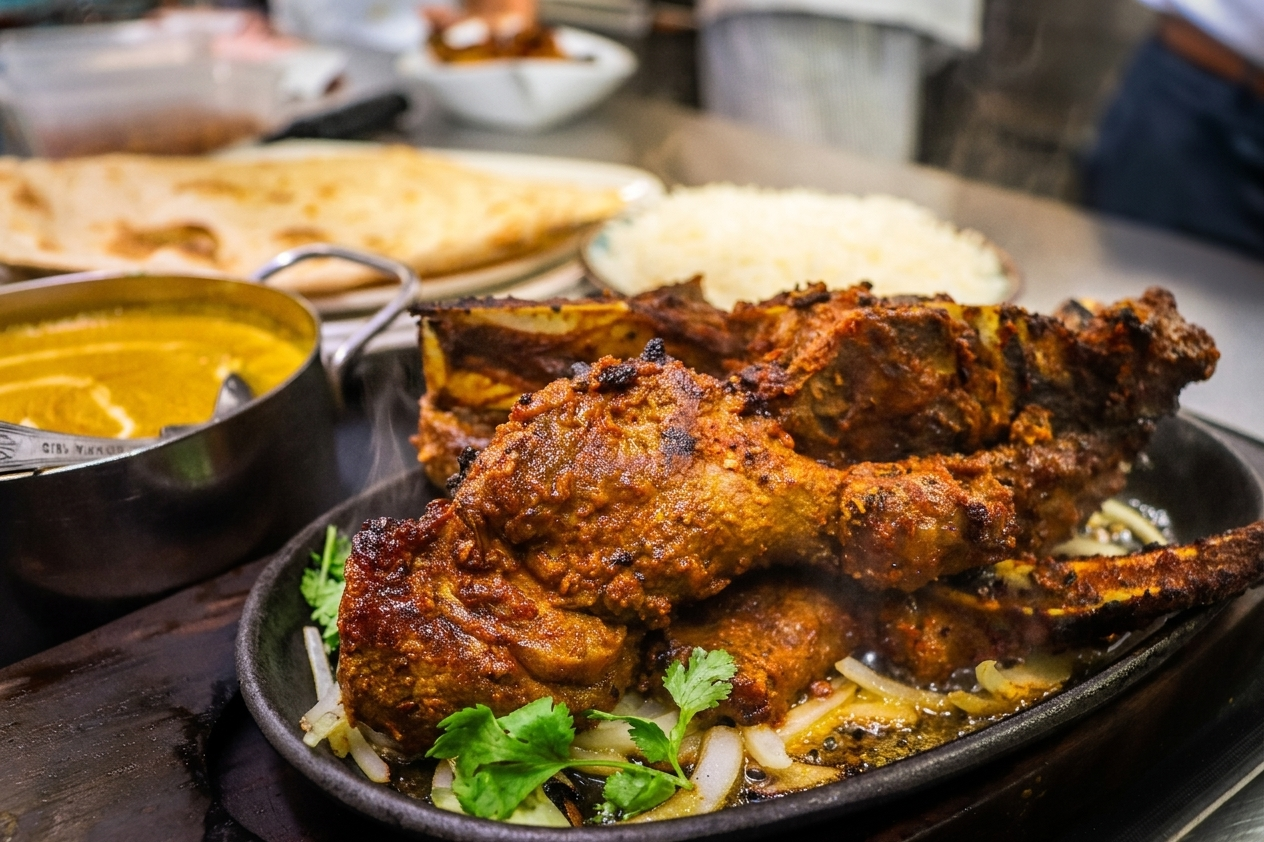
Few techniques create the same visual and aromatic impact as tandoor cooking.
A tandoor uses intense heat to cook food quickly while creating characteristic charred edges and smoky aromas.
For diners, this creates a completely different experience from a sauce-based curry.
Tandoori chicken, chicken tikka and kebabs are familiar examples, but the technique can also be used with seafood and other ingredients.
At Dilchad, tandoori dishes form part of a menu that brings together traditional favourites and broader South Asian influences. The restaurant's existing content also highlights tandoori cooking alongside biryani and slow-cooked curries.
If you normally order a curry every time you visit an Indian restaurant, trying something from the tandoor is an easy way to make your next meal more interesting.
Biryani: A Dish With a Story of Its Own
Biryani deserves special attention because it represents one of the great meeting points between rice, spice and slow cooking.
At its simplest, biryani combines aromatic long-grain rice with meat, seafood or vegetables and a carefully balanced mixture of spices.
But there is no single biryani.
Different regions have developed their own approaches, with variations in ingredients, cooking methods, spice blends and presentation.
Dilchad has previously explored the different varieties of biryani, including the wider history of the dish and its place in South Asian cooking. The restaurant describes its own biryani as being prepared with long-grain basmati rice, freshly ground spices and carefully marinated ingredients.
This makes biryani particularly interesting for diners who want to explore something beyond a standard curry.
It can also be an excellent choice for sharing. Place a fragrant biryani in the middle of the table with a few complementary dishes and suddenly the meal becomes a communal experience.
If you want to understand more about the different styles, you can explore Dilchad's guide to Indian biryani varieties.
The Importance of Fish in Bengali Cuisine
For anyone discovering Bengali cuisine for the first time, fish is one of the areas worth exploring.
Bengal's rivers and waterways have historically made fish an important part of everyday cooking. As a result, Bengali food developed a remarkable range of fish dishes, using different species, spices and cooking techniques.
This is one of the characteristics that can distinguish Bengali cooking from the generic “Indian restaurant” experience familiar to many British diners.
Instead of treating fish as simply another protein that can be placed into a standard curry sauce, Bengali cuisine has developed its own traditions around seafood.
For diners who normally choose chicken or lamb, ordering a fish dish can therefore be one of the easiest ways to expand their understanding of South Asian food.
It also connects directly with Dilchad's Bengali heritage and the restaurant's broader emphasis on traditional South Asian flavours.
Indian Food Is Not Just About Meat
Vegetarian cooking has always been an essential part of the Indian subcontinent's culinary traditions.
Dal, chickpeas, potatoes, cauliflower, spinach, aubergine, okra and other vegetables can become complete dishes through the careful use of spices and cooking techniques.
One of the great strengths of Indian cuisine is that removing meat does not mean removing complexity.
A well-made dal can be rich and deeply aromatic. A vegetable bhaji can provide texture and freshness. Chana masala can deliver earthy depth. Aloo gobi can be comforting, fragrant and satisfying.
For a group meal, vegetarian dishes are also ideal for sharing because they can provide a contrast to richer meat-based curries.
If you are dining with someone who prefers vegetarian food, do not think of their meal as an afterthought. Indian cuisine gives you an opportunity to make vegetables one of the highlights of the table.
Why Spitalfields Is Such a Natural Home for Dilchad
Location is part of a restaurant's identity.
Dilchad is not simply an Indian restaurant somewhere in London. It is located in Spitalfields, an area with a particularly rich history of migration, markets, trade and cultural exchange.
Old Spitalfields Market is nearby. Liverpool Street Station is within easy walking distance. The City of London is close enough to make the restaurant a practical option for weekday lunches, after-work meals and business gatherings.
That combination of history and modern London makes the location particularly appropriate for a restaurant whose own story is about cultural exchange.
You can learn more about Dilchad's location and get in touch through the contact page.
More Than a Restaurant: A Place for Occasions
Restaurants that survive for generations tend to become more than places to eat.
They become places where things happen.
Birthdays. Anniversaries. Family meals. Business lunches. Catch-ups with old friends. Celebrations. Introductions.
Dilchad specifically highlights birthday meals, corporate events and event planning as part of its offering.
That makes sense for a restaurant with such a long relationship with its local community.
The role of a restaurant is often underestimated. Food provides the reason to meet, but the memories are usually created around the meal.
A dish can be remembered because of how good it tasted, but also because of who was sitting around the table when it was served.
What Should You Order at Dilchad?
There is no single correct answer.
The best choice depends on what you enjoy and how adventurous you want to be.
If you are new to Indian cuisine, a combination of familiar and unfamiliar dishes works well. Start with a classic starter, then choose a tandoori dish or curry alongside rice or naan.
If you already know Indian food well, use the menu as an opportunity to explore Dilchad's Bengali identity. Look beyond the most familiar British curry-house dishes and ask about regional specialities.
For groups, sharing is the easiest way to explore. Several smaller dishes can create a more interesting meal than everyone ordering exactly the same type of curry.
And if biryani is your favourite, it deserves to be treated as the centrepiece rather than simply a side order.
For inspiration, Dilchad already has a guide to 10 must-try dishes at Dilchad.
The Story Behind the Food Matters
There is an important difference between eating a dish and understanding where it comes from.
When you know that a restaurant has been part of a community since 1962, a plate of curry becomes connected to something larger.
It becomes part of a story about immigration, entrepreneurship, family, British food culture and the evolution of London's East End.
That is particularly relevant to Dilchad.
The restaurant's history is not something added to the brand after the fact. It is part of the reason the restaurant exists in the first place.
The Choudhury family's story, Bengali heritage and connection to the East End all contribute to the identity that diners encounter today.
That is why the restaurant's food should be viewed through the lens of both tradition and evolution.
Six Decades Later, the Story Continues
Restaurants come and go quickly in London.
Trends change. Neighbourhoods change. Diners change. Menus change.
Surviving for more than six decades therefore means more than simply staying open.
It means remaining relevant while retaining something recognisable.
Dilchad's history began in 1962, when the Choudhury family established the restaurant in East London. More than sixty years later, the restaurant continues to operate from 24 Widegate Street and serve the local community, London visitors and diners looking to experience South Asian food.
That makes a visit to Dilchad more than another meal in London.
It is an opportunity to experience a small part of the culinary history of East London.
Discover Dilchad for Yourself
Indian cuisine becomes much more interesting when you stop thinking of it as one type of food.
There are Bengali traditions, regional Indian dishes, tandoori cooking, biryanis, vegetarian food, seafood, slow-cooked curries and generations of recipes shaped by movement between cultures.
Dilchad sits at the intersection of those stories.
Founded by the Choudhury family in 1962, rooted in the Bengali community of East London and located in historic Spitalfields, the restaurant has developed an identity that connects its past with the way people eat in London today.
Whether you are visiting for a quick lunch near Liverpool Street, meeting friends for dinner, celebrating a special occasion or simply looking for somewhere to explore South Asian flavours, Dilchad offers an opportunity to experience more than a familiar curry-house meal.
Come for the food. Discover the history. Stay for the experience.
Experience Dilchad in Spitalfields
Explore the menu, discover the story and plan your next visit to one of East London's long-established Indian restaurants.
