
If you have ever bitten into a rich, creamy chicken tikka masala at a London curry house and thought, “This must be what people eat in Mumbai every day,” you are not alone. Millions of people across the UK ask the same question: Is Indian food in London actually Indian? The honest truth is more fascinating than a simple yes or no. London’s Indian food scene is a unique blend of history, migration, adaptation, and genuine culinary brilliance. Some of it is deeply authentic. Some of it was invented right here in Britain. And understanding the difference will completely change the way you eat out.
The Short Answer
No, not all Indian food in London is authentically Indian, but that does not make it less delicious.
Much of what is served in British curry houses is a localised version of South Asian cuisine, adapted over decades to suit British tastes. Dishes like chicken tikka masala, balti, and phaal were either invented in the UK or significantly changed from their original Indian versions. However, London also has a growing number of restaurants serving genuinely regional Indian cuisine, from Bengali fish curries to Keralan coconut stews, that closely mirror what people actually eat in India today.
Is London Known for Its Indian Food?
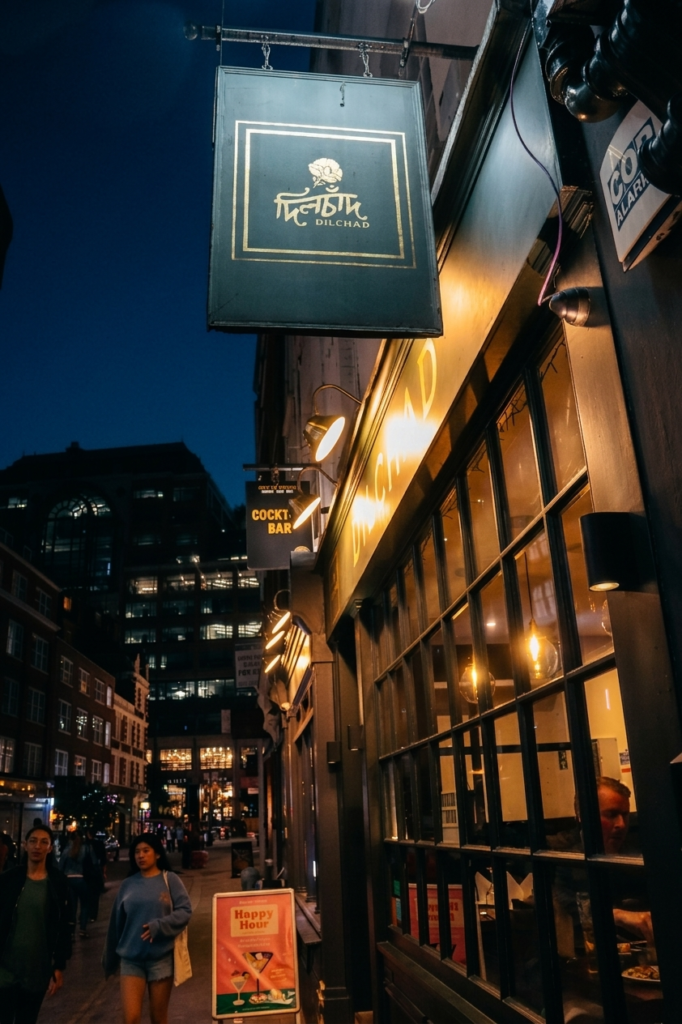
Yes, London is considered one of the best cities in the world outside of India to eat Indian food. The city has thousands of Indian, Bangladeshi, and Pakistani restaurants, ranging from cheap and cheerful takeaways to Michelin-starred fine dining.
Here is why London has such a strong Indian food identity:
- Large South Asian diaspora: Millions of people from India, Bangladesh, and Pakistan have settled in London since the 1950s, bringing their food cultures with them.
- Long colonial history: British ties to India date back over 400 years, and spices, recipes, and cooks have been flowing between the two countries ever since.
- High demand from locals: British people genuinely love curry. A 2011 survey named jalfrezi the most popular dish in British Indian restaurants, overtaking chicken tikka masala. (Reference: Curry in the United Kingdom – Wikipedia)
- Award-winning restaurants: London is home to six Michelin-starred Indian restaurants, more than any other city outside India. (Reference: The MICHELIN Guide – Indian Restaurants UK)
So yes, London is absolutely known for its Indian food. But “Indian food in London” is a broad category that covers both authentic regional cooking and British-adapted curry house cuisine.
Is Indian Food in the UK Different from India?
Significantly different, yes. If you visit India after years of eating curry in Britain, you will notice the differences almost immediately.
Key Differences Between UK Indian Food and Food in India
Spice blends: In India, every dish uses a freshly ground, unique spice blend. A lamb korma from Lucknow tastes completely different to a chicken curry from Chennai. In the UK, most curry houses use a standardised base gravy with curry powder added. The result is that many dishes taste similar underneath the surface flavours.
Want to know which spices make authentic Indian food so distinctive? Read our guide to The Ultimate List of 10 Popular Spices in Indian Dishes.
Use of cream and sugar: British curries are notably creamier and slightly sweeter than their Indian counterparts. Dishes like korma and tikka masala are loaded with double cream and sugar, which is far heavier than the yoghurt or coconut milk typically used in India. (Reference: Curry Culture – Can the British Curry Take Off in India?)
Regional diversity: India has 28 states, each with its own completely distinct cuisine. In the UK, the menu at most curry houses represents only a tiny slice of that diversity, heavily influenced by North Indian and Bangladeshi cooking styles. See our post on the 10 Most Popular Indian Vegetarian Dishes to understand the variety that exists within Indian food.
Communal eating style: In India, meals are typically shared across multiple small dishes, eaten together with rice or flatbread. In the UK, most Indian restaurant meals are served as individual plates, often with a large portion of one curry.
Cooking methods: Indian home cooking is slow, patient, and ingredient-led. UK curry houses, due to high volume and time pressure, often pre-cook base sauces and reheat portions to order, which changes the depth and freshness of flavour.
Is British Curry Authentic?
This is the most debated question in UK food culture, and the answer depends on how you define “authentic.”
The case that British curry is not authentic: Many beloved British dishes have almost no equivalent in India. Chicken tikka masala is widely believed to have been invented in Glasgow in the 1970s when a customer asked for gravy on his chicken tikka. Balti, the signature Birmingham dish, is also largely a British creation. Phaal, the eye-wateringly hot curry found on menus across London, is unheard of in India. (Reference: BBC Food – The History of the British Curry)
The case that British curry is authentic in its own way: Food always evolves when it crosses borders. Italian food in New York is not the same as food in Naples, but nobody would call it fake. British curry is an authentic expression of South Asian cooking filtered through 200 years of migration, nostalgia, and cultural exchange. It is its own cuisine now, with its own rules and identity.
The verdict: British curry is not traditional Indian food. But it is an authentic British food with genuine South Asian roots. The two can and should coexist.
“Chicken tikka masala is a true British national dish.” – Robin Cook, British Foreign Secretary, 2001 (Reference: Wikipedia)
Curious about authentic Indian cooking techniques? Try making our Tandoori Chicken Curry at home and taste the real difference.
A Brief History of Indian Food in the UK
Understanding the history of Indian food in the UK explains everything about why it looks and tastes the way it does today. (Reference: The Spicery – A Brief History of Indian Food in London)
- 1810: The first Indian restaurant in Britain, the Hindoostanee Coffee House, opens in London, catering to East India Company employees craving familiar flavours.
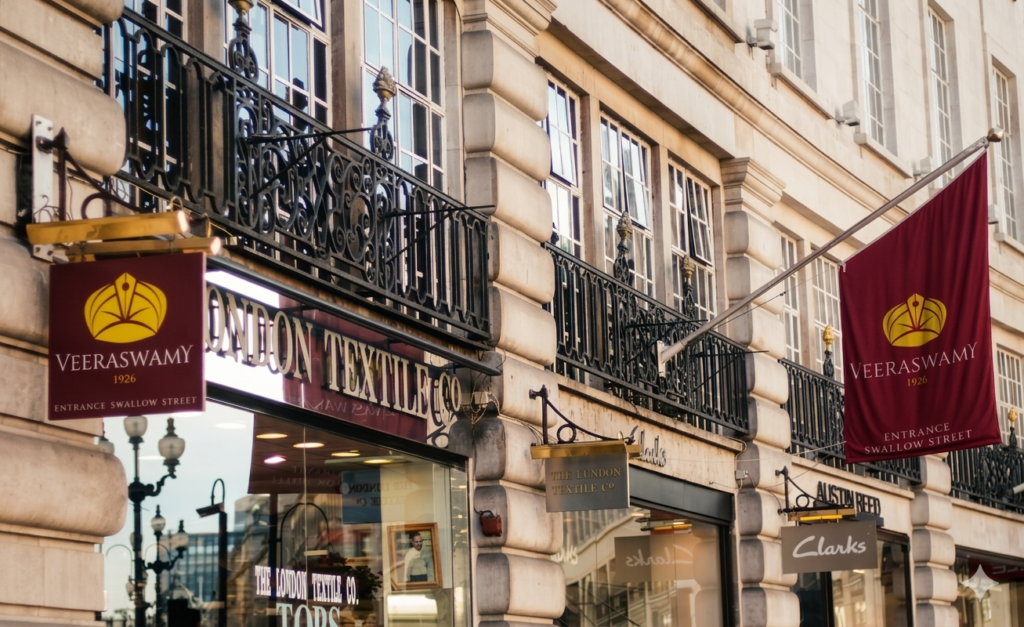
- 1926: Veeraswamy opens on Regent Street, London. It is still trading today and remains the oldest surviving Indian restaurant in Britain.
- 1950s and 1960s: Large waves of South Asian immigrants arrive in Britain. Many from Bangladesh, particularly the Sylhet region, open curry houses to earn a living. By the 1970s, over 75% of “Indian” restaurants in the UK were run by Bangladeshi families.
- 1962: Dilchad opens in Spitalfields, East London, founded by the Choudhury family, becoming one of the earliest authentic Bengali restaurants in the city and a pillar of the East End community.
- 1980s and 1990s: The British curry house reaches its peak. Curry becomes woven into British identity, with a curry house in almost every town.
- 2001: Foreign Secretary Robin Cook calls chicken tikka masala “a true British national dish” in a speech to Parliament.
- 2010s onwards: A new wave of regional Indian restaurants opens across London, offering Keralan, Goan, Tamil, and Bengali cuisines that better reflect the true diversity of Indian cooking.
Today, London has approximately 8,000 Indian and South Asian restaurants, employing hundreds of thousands of people and generating over £4.2 billion in annual revenue. (Reference: Curry in the United Kingdom – Wikipedia)
British Indian Food vs Real Indian Food: A Comparison
| Feature | British Indian Food | Authentic Indian Food |
| Spices | Curry powder, standardised blends | Fresh, dish-specific spice blends |
| Creaminess | Heavy use of double cream | Yoghurt, coconut milk, cashew paste |
| Sweetness | Noticeably sweeter | Rarely sweet in savoury dishes |
| Regional variety | Limited, mainly North Indian style | Enormous, 28+ state cuisines |
| Famous dishes | Tikka masala, korma, balti, jalfrezi | Biryani, dosa, fish curry, rogan josh |
| Cooking method | Pre-made base gravy, fast service | Slow-cooked, fresh per dish |
| Eating style | Individual plates | Shared communal meals |
| Origin | UK, evolved from South Asian cuisine | India, Bangladesh, Sri Lanka |
Curious about specific dishes on both sides of this divide? Explore our guides:
- Chicken Tikka Masala Recipe – the iconic British-Indian dish explained
- Butter Chicken Recipe – the authentic Indian original
- Indian Biryani Varieties Explained – a dish that crosses both worlds
Where to Find Genuinely Authentic Indian Food in London
If you want to experience Indian food that goes beyond the standard curry house menu, London has excellent options. The key is knowing what to look for.
Tips for Finding Authentic Indian Food in London
- Look for regional menus: Restaurants that specify a region (Bengali, Keralan, Goan, Punjabi) are usually more authentic than those with generic “Indian” menus.
- Check who is in the kitchen: Family-run restaurants with chefs from the region they are cooking in are almost always more authentic.
- Look for history: Restaurants that have been operating for decades are trusted by the local South Asian community, which is a strong signal of authenticity.
- Avoid tourist traps: Areas like Brick Lane, while historically significant, now have many restaurants that prioritise foot traffic over food quality. (Reference: The Guardian – How to Find Authentic Indian Food in London)
- Look for the community: If a restaurant is full of South Asian families, it is almost certainly serving authentic food.
Dilchad: Authentic Bengali Food in Spitalfields Since 1962
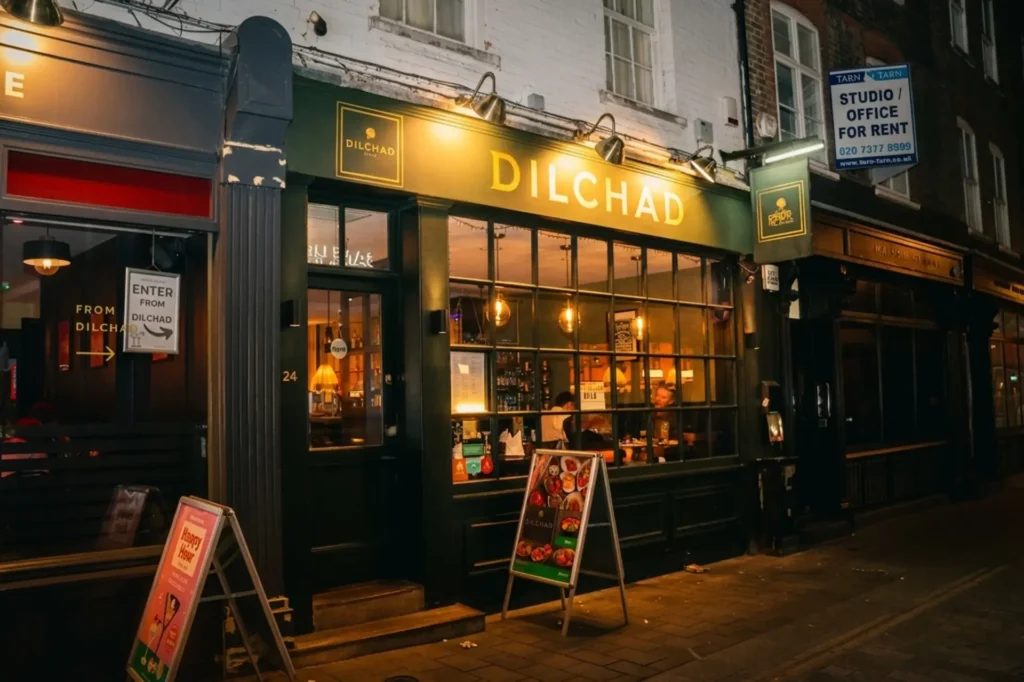
One of the most genuinely authentic Indian dining experiences in East London can be found at Dilchad, located at 24 Widegate St, Spitalfields, London E1 7HP, just a short walk from Liverpool Street station.
Founded in 1962 by the Choudhury family, Dilchad is one of London’s oldest family-run Indian restaurants and a cornerstone of the Bengali community in the East End. Unlike most curry houses, Dilchad serves traditional Bengali cuisine, including fish curries, slow-cooked lamb dishes, and regional specialities that reflect the flavours of Bangladesh and West Bengal rather than a generic British Indian menu.
The restaurant has served students, factory workers, politicians, and food lovers for over six decades. If you want to taste Indian food in London that is genuinely rooted in tradition, Dilchad is one of the best places to start.
Want to know what to order when you visit? Read our guide to 10 Must-Try Dishes at Dilchad for Indian Food Lovers in London.
Is Indian Food Healthy in the UK?
Indian food can be very healthy, but it depends entirely on what you order and where you eat.
Healthy Aspects of Indian Food in the UK
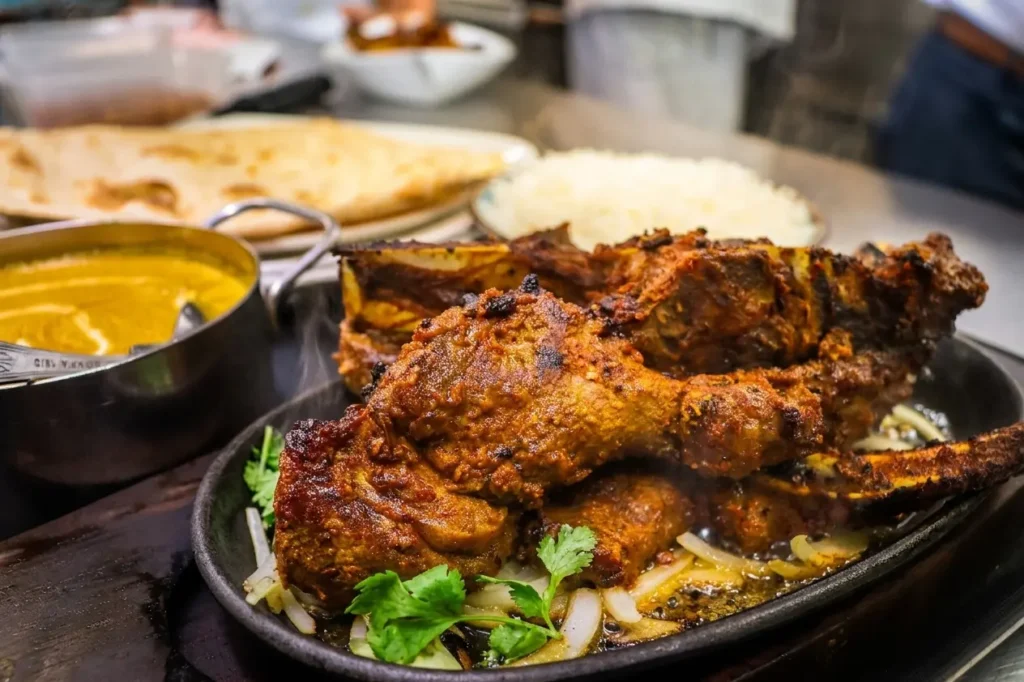
- Spices with health benefits: Turmeric, ginger, garlic, and cumin all have well-documented anti-inflammatory and digestive properties. (Reference: BBC Good Food – Health Benefits of Spices)
- Plant-based options: Indian cuisine offers some of the world’s best vegetarian and vegan dishes, including lentil dal, chana masala, and vegetable curries. See our list of 10 Most Popular Indian Vegetarian Dishes.
- High protein dishes: Grilled tandoori chicken, lamb kebabs, and paneer dishes are high in protein and relatively low in processed ingredients.
- Gluten-free options: Many Indian dishes are naturally gluten-free. Read our guide to Gluten-Free Indian Dishes for more details.
Less Healthy Aspects of UK Curry House Food
- Heavy cream sauces add significant calories and saturated fat.
- Naan bread, especially garlic butter naan, can be very high in calories.
- Takeaway curries often contain more salt, sugar, and oil than restaurant versions.
The healthiest choices at a British Indian restaurant include: tandoori dishes, dal, vegetable sides, raita, and plain rice or chapati. Grilled starters like seekh kebab or chicken tikka are far better than deep-fried bhajis or samosas as a regular choice. For healthy Indian meal ideas, see our blog on Healthy Popular Indian Dishes You Should Try.
Conclusion
So, is Indian food in London actually Indian? The honest answer is: it is complicated, and that complexity is exactly what makes London’s Indian food scene so interesting.
Some of what you will find in curry houses across the city is a uniquely British creation, born from migration, necessity, and the British love of bold flavours. Other restaurants serve deeply authentic regional Indian and Bengali food that rivals anything you would find in India itself.
The best approach is to explore beyond the standard chicken tikka masala and korma. Ask questions, seek out family-run restaurants, and look for menus that celebrate regional specificity rather than generic “Indian” dishes.
If you are in the Spitalfields or Liverpool Street area and want to taste what genuine Bengali-Indian cooking actually looks and tastes like, book a table at Dilchad. With over 60 years of history and a menu rooted in authentic Bengali tradition, it is one of the few places in London where the answer to “is this actually Indian?” is a confident yes.
Reserve your table at Dilchad today: 📍 24 Widegate St, Spitalfields, London E1 7HP 📞 020 7247 9614 🌐 www.dilchad.com 📅 Book a Table Online
Frequently Asked Questions
1. Is Indian food in London the same as food in India?
No. Most Indian food served in London has been adapted to suit British tastes. It tends to be creamier, milder, and sweeter than authentic Indian food. However, London also has many restaurants serving genuinely regional Indian and Bengali cuisine that closely reflects real Indian cooking.
2. Is British curry actually Indian?
Not entirely. Dishes like chicken tikka masala and balti were either invented in the UK or significantly changed from their Indian originals. British curry is a unique cuisine that evolved from South Asian cooking traditions brought to the UK by Bangladeshi, Pakistani, and Indian immigrants over the last 200 years.
3. Why is Indian food so popular in the UK?
Indian food became popular in the UK due to over 400 years of colonial ties between Britain and India, large-scale South Asian immigration from the 1950s onwards, and the fact that British curry houses adapted their menus to suit local tastes perfectly. Today, curry is considered part of British national identity.
4. Where can I find authentic Indian food in London near Liverpool Street?
Authentic Indian food near Liverpool Street can be found at Dilchad, located at 24 Widegate St, Spitalfields, London E1 7HP. Founded in 1962, Dilchad is one of East London’s oldest family-run Bengali restaurants and serves genuinely traditional cuisine rather than adapted British-Indian dishes.
5. Is Indian food in the UK healthy?
It can be. Tandoori dishes, lentil dal, vegetable curries, and grilled meats are all nutritious choices. The less healthy options include heavy cream-based sauces, deep-fried starters, and butter naan. Eating at authentic Indian restaurants rather than takeaways generally means fresher, less processed food. Read more in our guide toHealthy Popular Indian Dishes You Should Try.
